Stucco repair
Stucco Repair in Clearwater, FL
Overview
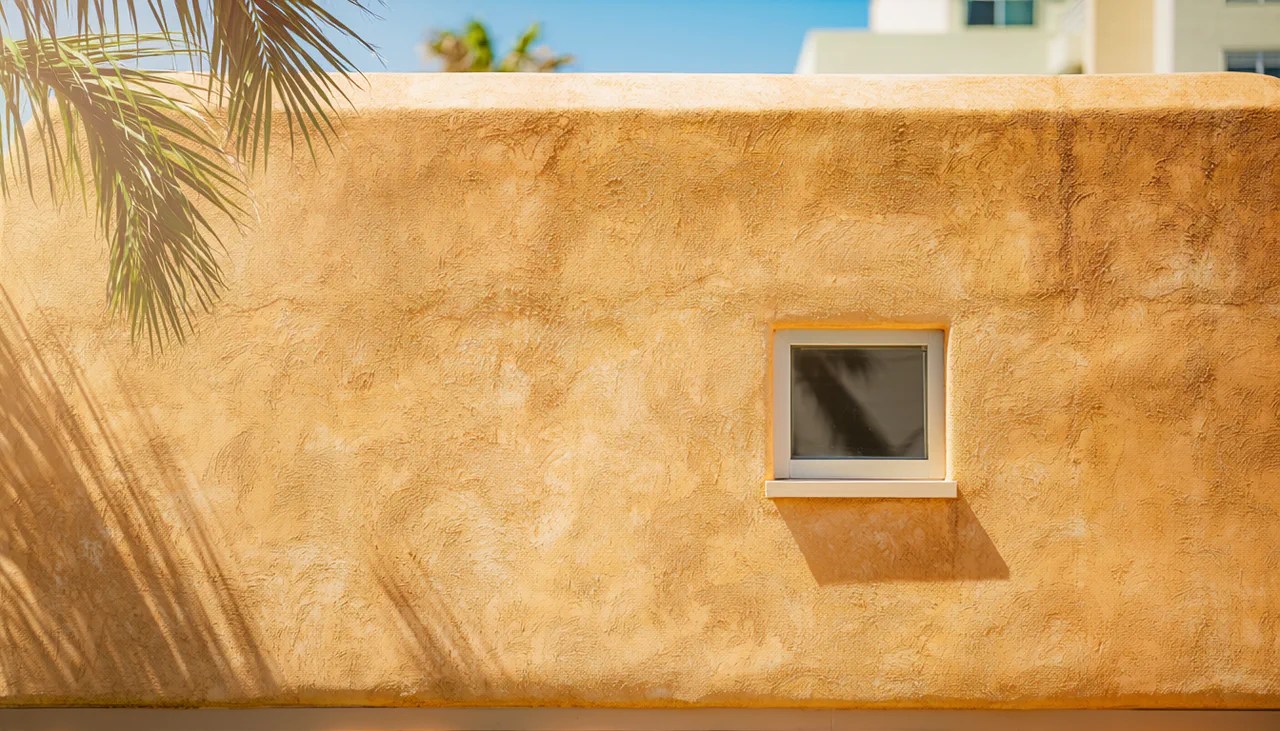
Stucco is one of the most common exterior finishes on homes throughout Clearwater, and it’s also one of the more demanding surfaces to keep in good shape here. A crack that looks purely cosmetic can be an early sign that moisture has already found its way behind the surface, and once that happens, a repair that only addresses what’s visible tends to fail again within a season or two.
Clearwater’s temperatures swing meaningfully across the year, from average lows in the low 50s in January to average highs near 90 in July and August. That kind of repeated expansion and contraction, combined with the wall taking on moisture during the wet season, is a big part of why stucco here develops hairline cracking over time even on well-built homes. Repairing it the right way means treating both the visible crack and whatever’s happening behind it, not just filling the gap and repainting over it.
The work
What's Included in Our Stucco Repair Service
- Assessment of whether cracking is cosmetic, or a sign of moisture trapped behind the stucco or movement in the substrate underneath
- Removal of loose, bubbling, or separated stucco back to solid material
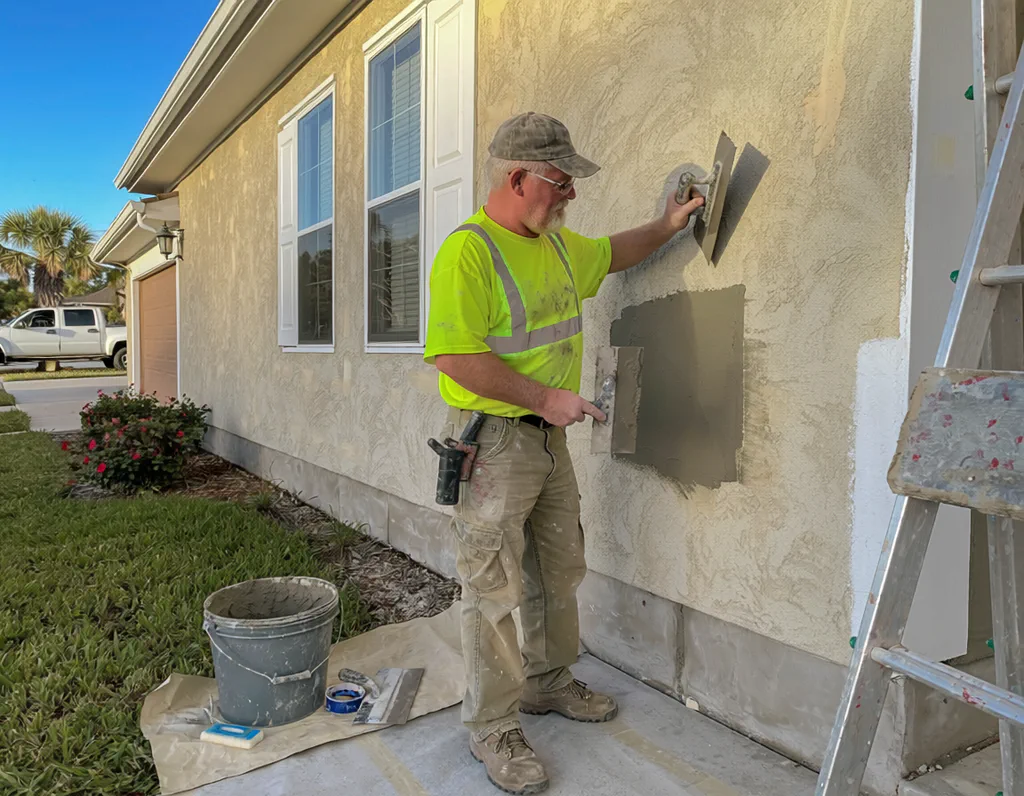
- Patching and rebuilding the repaired section in matching layers, the same way the original stucco was applied
- Texture matching so the patch blends into the surrounding wall instead of standing out as an obvious repair
- Priming and finish work to prepare the repaired area for paint
What to look for
Signs You Need Stucco Repair
Some stucco damage is obvious. Some isn’t, until it’s a bigger repair than it needed to be.
Hairline cracks spreading or forming a map-like pattern across the wall
Larger, wider cracks, especially near windows, doors, or corners where the structure moves the most
Bubbling, soft spots, or areas where the stucco sounds hollow when tapped
Staining or dark streaking, which often means water is getting behind the surface
Visible separation between stucco and the wall, or between stucco and trim
How it works
Our Process
-
Inspection and diagnosis
-
Removal of damaged material
-
Layered patch and rebuild
Texture match and finish
Questions
Frequently Asked Questions
- Why does stucco crack in the first place?
- Most stucco cracking comes down to either normal building movement, moisture getting behind the surface, or temperature-driven expansion and contraction. Clearwater’s temperature swings between winter mornings in the low 50s and summer afternoons near 90 put real repeated stress on an exterior surface over the years, which is part of why aging stucco develops these hairline cracks even on homes that are otherwise well maintained.
- Can a hairline crack turn into a bigger problem if I leave it?
- It can. A hairline crack that lets in rain gives moisture a path behind the stucco, and once that happens the damage tends to spread well beyond what was visible on the surface.
- Will the repair be visible once it's finished?
- Not if the texture match is done properly. We build the repair in the same layers as the original application and match the surrounding texture so the patch blends in rather than standing out.
- Do you repair stucco around windows and doors specifically?
- Yes. Cracking around window and door openings is one of the most common places we see stucco damage, since those areas see the most structural movement.
Free estimate
Get Your Stucco Cracks Assessed
Whether it’s a hairline crack or a larger section of damaged stucco, we’ll take a look, explain what’s causing it, and give you a clear estimate for the repair.